
Which screen-free games and books suit maths and reading practice for ages 8–12?
Choose separately for the skill you want to practise. Calculating a target in a maths card game is different from decoding words or explaining a story. A game containing written instructions does not automatically provide structured reading practice. For a family wanting both, pair a suitable maths game with a reading activity or paperback adventure.
For maths during family play
Number Quest is for ages 7+, with 2–6 players, three difficulty levels and a required timer. Players combine values to reach a target. For ages 10+, The Alchemist’s Numbers offers competitive play for 2–4 players, taking approximately 20–30 minutes. Family mode uses addition and subtraction; Advanced mode adds multiplication and exact division. No speed calculation or shouting is required. Neither is presented here as a reading programme.
For reading comprehension and vocabulary
- MARSBOUND is a paperback space adventure for reading ages 8–12. It includes 24 story chapters, 168 comprehension questions, a vocabulary glossary, a Reading Toolkit and a complete answer key. Choose it for story-based vocabulary, inference and explaining an answer with evidence from the text.
- A no-purchase reading activity: use a book you already own. Read a short passage together and ask, “Which sentence supports your idea?” Give help with unfamiliar words and discuss an answer before writing it down.
MARSBOUND is a book rather than a board game. Choose the story and reading level that suit the child; its practice activities are optional enrichment, not a guarantee of a particular school or examination result.
For maths on paper, Questbound Fast Maths Adventure is a separate activity book for ages 8–12. See our game-versus-workbook guide to choose the format. No single resource guarantees progress in both maths and reading.
What should you look for in interactive reading books for ages 8–12?
For screen-free reading, look for a printed story that gives children something to do with the words: collect clues, explain a character’s choice, predict an outcome or check a new word in a glossary. “Interactive” does not have to mean an app. Check the product format and a sample page, because a paperback, printable activity pack and browser game offer different experiences.
For children who love adventure, MARSBOUND combines a paperback space story with 24 chapters and 168 comprehension questions. Its glossary, Reading Toolkit and complete answer key give families ways to discuss vocabulary and check their reasoning. It is a story with practice activities, not a branching choose-your-own-adventure book.
Try a three-question reading mission
- Find: ask your child to choose one unfamiliar word and work out a possible meaning from the surrounding sentence.
- Explain: ask, “Why did this character make that choice?” Find a sentence that supports the answer.
- Predict: each reader suggests what might happen next, then checks the prediction after the next passage.
You can use this activity with a book you already own. Read aloud together if the text is demanding, and keep the discussion short enough to stay enjoyable. Match the reading level to the child, rather than age alone. For a separate number-focused adventure, compare the formats in our screen-free maths gift guide.
Table of Contents
- Screen-free maths and reading for ages 8–12
- How Games Can Add Variety to Reading Practice
- Phonics Games for Children: Building Sound Recognition
- Reading Fluency Activities: Accuracy and Expression
- Reading Comprehension Activities: Stories and Clues
- Reading Activities with Support for Struggling Readers
- How to Choose the Right Game for Your Child's Age and Level
- Making Game Time Stick: Tips for Regular Practice Without the Pressure
- Conclusion
- Frequently Asked Questions
Last Updated: November 1, 2026
How Games Can Add Variety to Reading Practice
Reading games can give children another reason to use a text: following a clue, predicting an event or discussing a character. Whether a game or worksheet suits your child depends on the reading skill, difficulty and support available.
A reading game gives a child a reason to use the text: following a clue, choosing an action or finding out what happens next. Match the activity to the reading skill being practised, and keep help available when a word or instruction is difficult.
Some children enjoy solving a mystery or playing a word game; others prefer a familiar story or a focused written activity. Try a manageable task and observe what helps your child participate.
A game can give a child a practical reason to read: finding information needed to solve a puzzle or choose an action. Check whether that purpose interests your child and whether they can access the text.
Some games show whether an answer fits a clue or allows the next move. Discuss why an answer works and help with mistakes; winning a round alone does not establish that a child understood the text.
Phonics Games for Children: Building Sound Recognition
Phonics games teach children how letters and sounds work together. These games build the foundation that all reading rests on.
Sound matching games work by pairing letter combinations with words. A child sees "ch" and must match it to the correct picture: chair, not apple. Repeat the activity to practise noticing the letter pattern and connecting it with its sound.
Rhyming games strengthen phonemic awareness. Games to improve children's reading include rhyming games where they find words that rhyme with a given word, helping them learn to hear and manipulate sounds.
Here's what makes phonics games effective:
- They isolate one sound or pattern at a time
- Children repeat the pattern multiple times without boredom
- Success feels immediate and obvious
- Games can be played repeatedly without feeling repetitive
Word-building games let children construct words from letter tiles or cards. Starting with simple three-letter words (cat, dog, run), children progress to longer words as their confidence grows. Discuss the sounds as you arrange the letters, and help the child blend them into a word.
Use phonics activities that match the child's current learning. Try a short task, give help as needed and ask the teacher which letter–sound patterns would be useful to practise.
Reading Fluency Activities: Accuracy and Expression
Fluency is the ability to read smoothly and with expression. A fluent reader doesn't stop to decode every word. They recognise words automatically and can focus on meaning instead.
For a playful rereading activity, choose a short passage your child can attempt with support. Read it together, then let your child choose a character voice for another reading. Notice accuracy, expression and words that need help. Keep the activity untimed if a countdown adds pressure.
Character voice games encourage expressive reading. Children choose a character from a story and read dialogue in that character's voice. A villain might sound angry or sneaky. A hero might sound brave and determined. Discuss which words suggest the character's mood and let the child try a voice that fits.
Echo reading games pair a fluent reader with a developing reader. The fluent reader reads a sentence aloud with natural rhythm and expression. The child then reads the same sentence, echoing the model. This gives the child a model of phrasing and expression to try.
What separates fluency games from simple reading practice is the element of play.
Reading Comprehension Activities: Stories and Clues
Comprehension is the whole point of reading. A child might decode every word perfectly but miss the story entirely if they're not thinking about what they're reading.
Mystery and detective activities can ask a child to connect clues and explain what happened. Encourage them to return to the relevant sentence and check whether it supports their idea.
For a shared story discussion activity, choose a mystery or adventure that suits the reader. Pause to collect clues, explain a character’s decision and predict what could happen next. Browse Quesbo’s current books and learning materials for available titles and their reading-age guidance.
Prediction activities invite children to think about what might happen next. Before reading the next chapter, a child predicts what will happen based on what they've learned so far. Then they read to find out if they were right. Compare the prediction with what happens and discuss which clues were useful.
Question games work well too. After reading a passage, a child answers questions about what they read. But the game element comes from earning points or unlocking rewards for correct answers, not from the questions themselves.
A mystery can give comprehension questions a story context. Some children enjoy that format; others prefer a short passage or direct questions.
Reading Activities with Support for Struggling Readers
If reading feels difficult, choose a manageable activity, offer help and allow time to think. A game is one possible setting for practice; it does not automatically remove pressure.
Adjust the difficulty and support to the child. A familiar task can provide a comfortable starting point; introduce a new word or challenge when they are ready.
Offer a choice of suitable stories, characters or tasks. Notice which option the child wants to try and keep help available when reading becomes difficult.
Notice specific effort and strategies, such as returning to a sentence to check a clue. Offer help with unfamiliar words and leave time for questions or a break.
Try a short session and adjust the length and frequency to the child's attention and reading level. Stop or take a break if the activity becomes tiring or frustrating.
Browse Quesbo books and learning materials
Many parents of struggling readers worry that games feel too easy or too frivolous. A game can provide another setting for practice. Keep the reading manageable, offer help with unfamiliar words and notice which skills need further support.
How to Choose the Right Game for Your Child's Age and Level
The best game for your child depends on three factors: their age, their reading level, and what skill they need to build.
For ages 7–8, choose activities around the skills the child actually needs. If letter–sound patterns or blending need practice, use suitable word-building or sound-matching tasks; if decoding is secure, explore fluency and meaning through a manageable text.
For ages 9–10, choose a suitable story and try a reading prediction activity: pause before a new chapter, suggest what might happen, then find a sentence that supports the prediction. Adjust the reading length and help to the individual child.
For ages 11–12, try discussing competing explanations for a mystery, comparing character choices or summarising a longer passage. Reading level and interest matter more than age alone.
But age is only a starting point. Reading level matters more. A nine-year-old reading at a seven-year-old level needs games designed for their level, not their age. Conversely, an advanced seven-year-old might thrive with games meant for older children.
Watch for these signs that a game is the right fit:
- Your child asks to play again
- They stay engaged for the full session without complaining
- They're willing to re-read passages to find answers
- They don't get frustrated when they make mistakes
If a game consistently frustrates your child or bores them, it's the wrong fit. Switch to something else.
Making Game Time Stick: Tips for Regular Practice Without the Pressure
Return to activities your child finds manageable and interesting. Repeated opportunities to read and discuss a text can be part of a routine that suits your family.
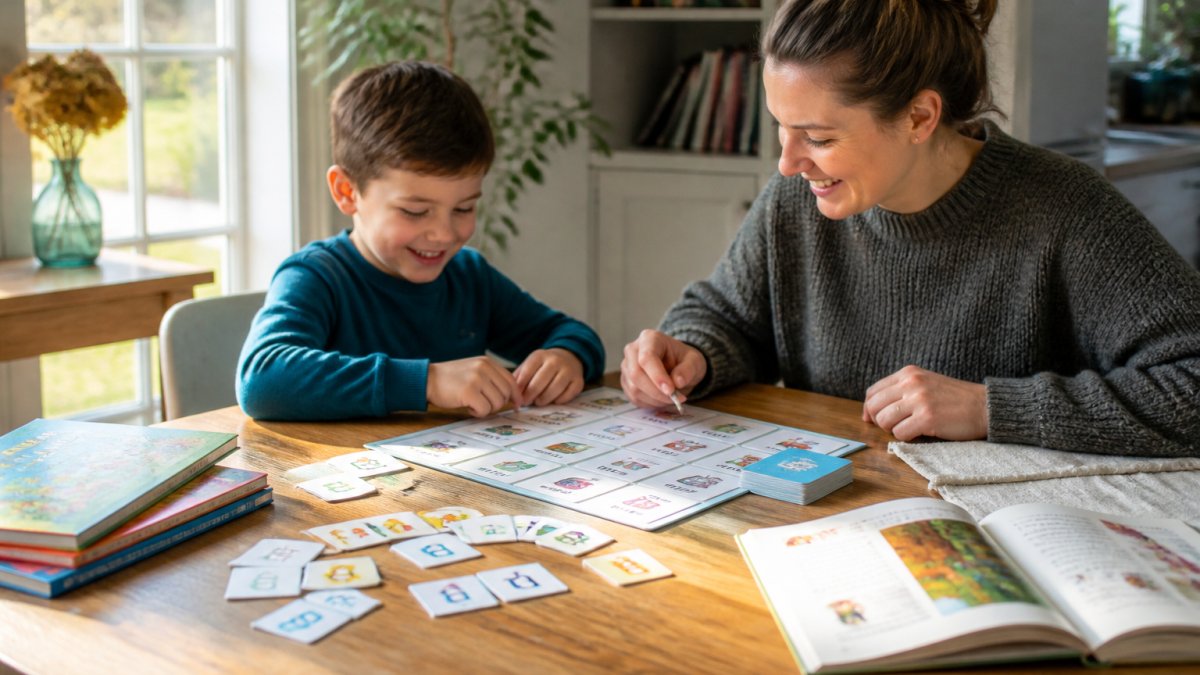
You could agree a convenient time for shared reading or a game. Keep the routine flexible around schoolwork, energy and other family activities.
Keep sessions short. Ten to fifteen minutes is one possible starting point. Adjust the session to the child’s attention and stop or take a break when needed.
Make it social. Play together when you can. Read aloud to your child. Take turns. Solve puzzles as a team. This makes space for shared discussion and help with unfamiliar text.
Balance questions with conversation and enjoyment. Offer supportive corrections when needed and let the child ask questions or choose what to discuss.
Celebrate progress, not perfection. Your child read a chapter without stopping? That's a win. They solved a mystery? Celebrate it. They stumbled over a word but kept going?
Rotate games to prevent boredom. Offer a different activity when your child would welcome a change. Mix phonics games with comprehension games. Mix digital games with books.
| Frequency | Duration | Best For |
|---|---|---|
| 3-4 times per week | 10-15 minutes | Building consistent habit |
| 2 times per week | 15-20 minutes | Busy families |
| Daily | 5-10 minutes | Quick skill reinforcement |
Choose a routine that your family can manage, and change it if it becomes difficult to sustain.
Conclusion
Games and story challenges offer ways to vary reading practice. Choose an activity the child wants to try and check that it gives useful practice at a manageable level.
The activities above offer different reasons to use text, from matching sounds to discussing a mystery. Choose for the child's current reading needs and interests, then adjust the task as you observe them.
Start with one game or book that matches your child's age and level. Play together. Keep sessions short. Celebrate small wins. Notice what your child can manage, which activities they enjoy and where they still need help.
When choosing a Quesbo book, check the current product page for its format, reading-age guide and content. A mystery novel can support shared discussion, while a structured phonics activity has a different purpose. Choose the activity for the skill you want to practise.
Choose one suitable activity and try it together. Notice which parts your child enjoys and which need more help.
Frequently Asked Questions
What games help children improve their reading?
Choose a game for the reading skill you want to practise. Word-building and sound-matching activities focus on letters and sounds; story prediction and clue discussion focus on meaning. Pick text the child can attempt with suitable support, and use the activity as an opportunity to practise together.
How can games help children learn phonics?
Sound-matching and word-building games provide ways to practise letter–sound relationships and blending. Choose patterns that match the child's current learning, model unfamiliar sounds and repeat manageable examples. Rhyming activities focus on hearing similarities between spoken words and have a different purpose.
Can games really help a struggling reader catch up?
Games can offer another way to practise, but they do not guarantee that a child will catch up. Start with an activity at a manageable reading level, give help when needed and adjust the difficulty. If reading remains difficult, discuss the specific skills and suitable support with the child’s teacher.
How often should children play reading games to see improvement?
Choose a short routine that your child can manage comfortably, and adjust the length to their attention and reading level. Take turns, discuss the text and stop before frustration builds. There is no fixed play schedule that guarantees reading improvement.
Games offer one way to vary reading practice. Start with a manageable activity, provide support and notice which skills need further attention. If reading remains difficult, discuss suitable next steps with the child's teacher.
Get started with Quesbo and turn "What shall we do?" into "Let's read again!"
