
Last Updated: 21 November 2026
Quick Summary
The best science magazines for curious 8 to 11 year olds combine clear explanations with photographs, puzzles and experiments, so the reader stays engaged. Quesbo Explorer is one example, with illustrated adventure issues priced at £4.99 for digital copies. Choose a title by matching your child's interests, reading level and appetite for hands-on activities.
- Pick science magazines that pair clear explanations with photographs, puzzles and experiments.
- Match the magazine to your child's interests, such as animals, maps or nature.
- Check reading level by reading a sample spread, not just the stated age range.
- Digital Quesbo Explorer issues are priced at £4.99, so one issue can be tried first.
- Check renewal price and cancellation terms before subscribing, as auto-renewal is easy to miss.
Table of Contents
- Why Science Magazines Suit Curious 8 to 11 Year Olds
- How to Choose a Science Magazine for Your Child
- Best Science Magazines for Kids in This Age Group
- Science Magazines With Experiments for Kids
- Science Magazines for 10 Year Olds and Reading Level
- Children's Science Magazine Subscriptions and Costs
- Choose Your Child's First Issue This Week
- Frequently Asked Questions
Choosing a science magazine for a curious child aged 8 to 11 is harder than it looks. Many titles promise hands-on fun, but the right one depends on reading level, interests and how much your child will actually read alone. Quesbo, a family-run UK brand, makes illustrated adventure magazines for children, and the rest of this guide uses that range to show what to look for.
Science magazines for curious children work best when they feel like an adventure rather than a school worksheet. The strongest ones pair clear explanations with photographs, puzzles and experiments, so a child stays engaged long enough to learn something. That combination matters because children of this age ask a lot of questions, and a good magazine gives them somewhere to find answers without a screen.
Quesbo Explorer is built around that idea. Each issue follows an illustrated journey, with missions, challenges and factual pages woven together, and it asks the reader to observe, reason and try things out. Below, we cover how to choose a title, which issues suit different interests, and what to expect on price.
Why Science Magazines Suit Curious 8 to 11 Year Olds
Children aged 8 to 11 are at a stage where they want to understand how things work and why. A magazine lets them dip into a topic, follow a thread and return to it on another day, which fits their attention better than a long textbook chapter. Because they can read a little independently, they also gain confidence when they finish a page on their own.
Screen-free reading has a practical benefit too. A printed or downloadable magazine gives a child a focused activity that is not a game or video. Many parents find that a magazine sparks conversation at the dinner table, which is a useful side effect of a good title.
How to Choose a Science Magazine for Your Child
Start with your child's interests. A child who loves animals will engage with wildlife content, while one who likes maps may prefer geography and travel. Next, check the reading level: a magazine that is too hard will be abandoned, and one that is too easy will bore a confident reader. Look at sample pages if the publisher provides them.
Consider how much your child wants to do, not just read. Some issues include missions, puzzles and experiments, while others are mainly illustrated articles. Finally, think about format and cost. Digital issues are often cheaper and quicker to get, while print editions suit children who prefer paper.
Best Science Magazines for Kids in This Age Group
The Quesbo Explorer range is a good place to start for children in this age group, because every issue is aimed at ages 8 to 11 and shares the same adventure format. Each issue focuses on a different destination, so you can match one to your child's curiosity. Digital issues are priced at £4.99, which makes it easy to try one before committing.
Quesbo Explorer is published by Questbound Studios Ltd. See Quesbo Explorer Magazine for an example issue.
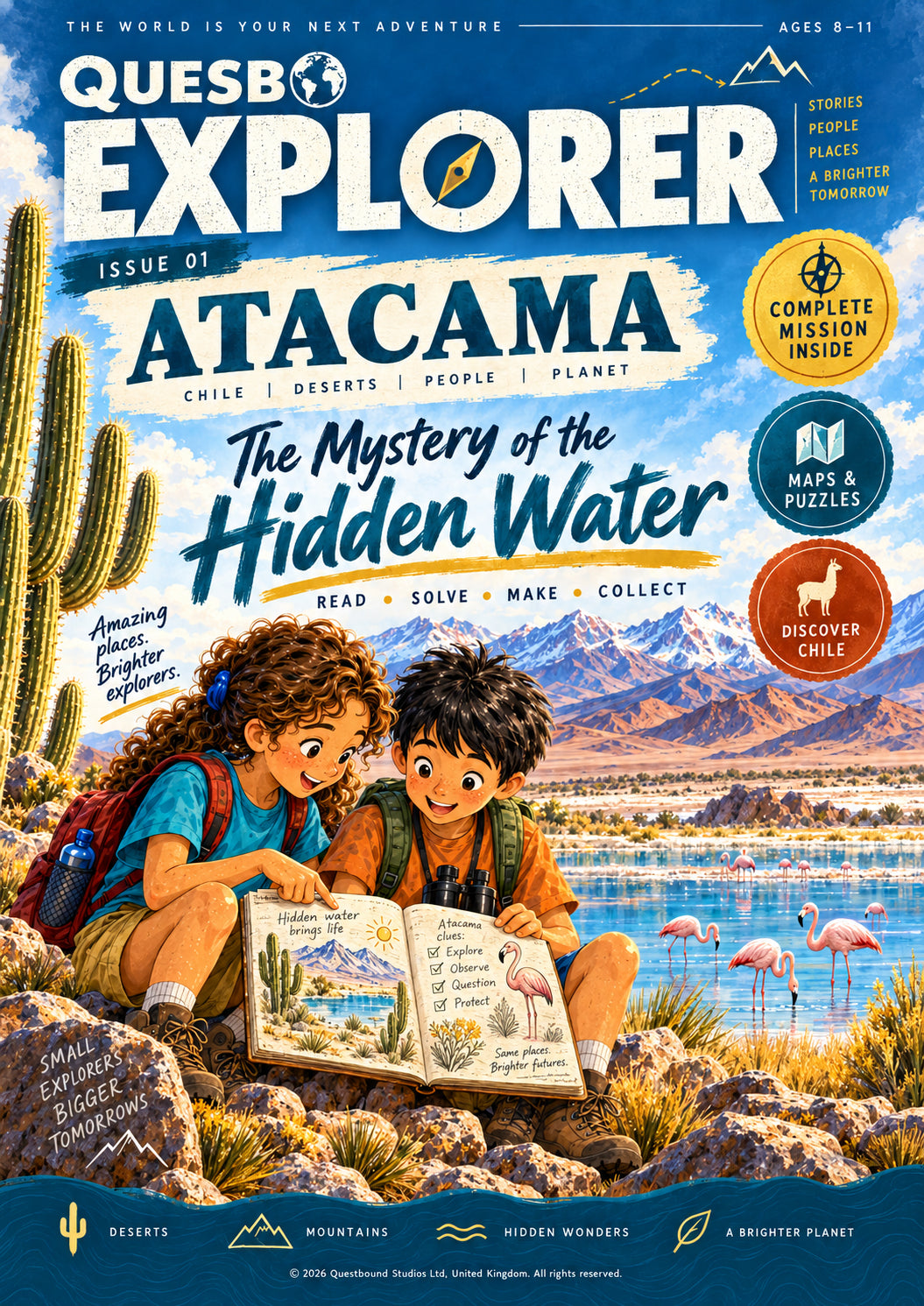
Quesbo Explorer Issue 1: Atacama (Chile)
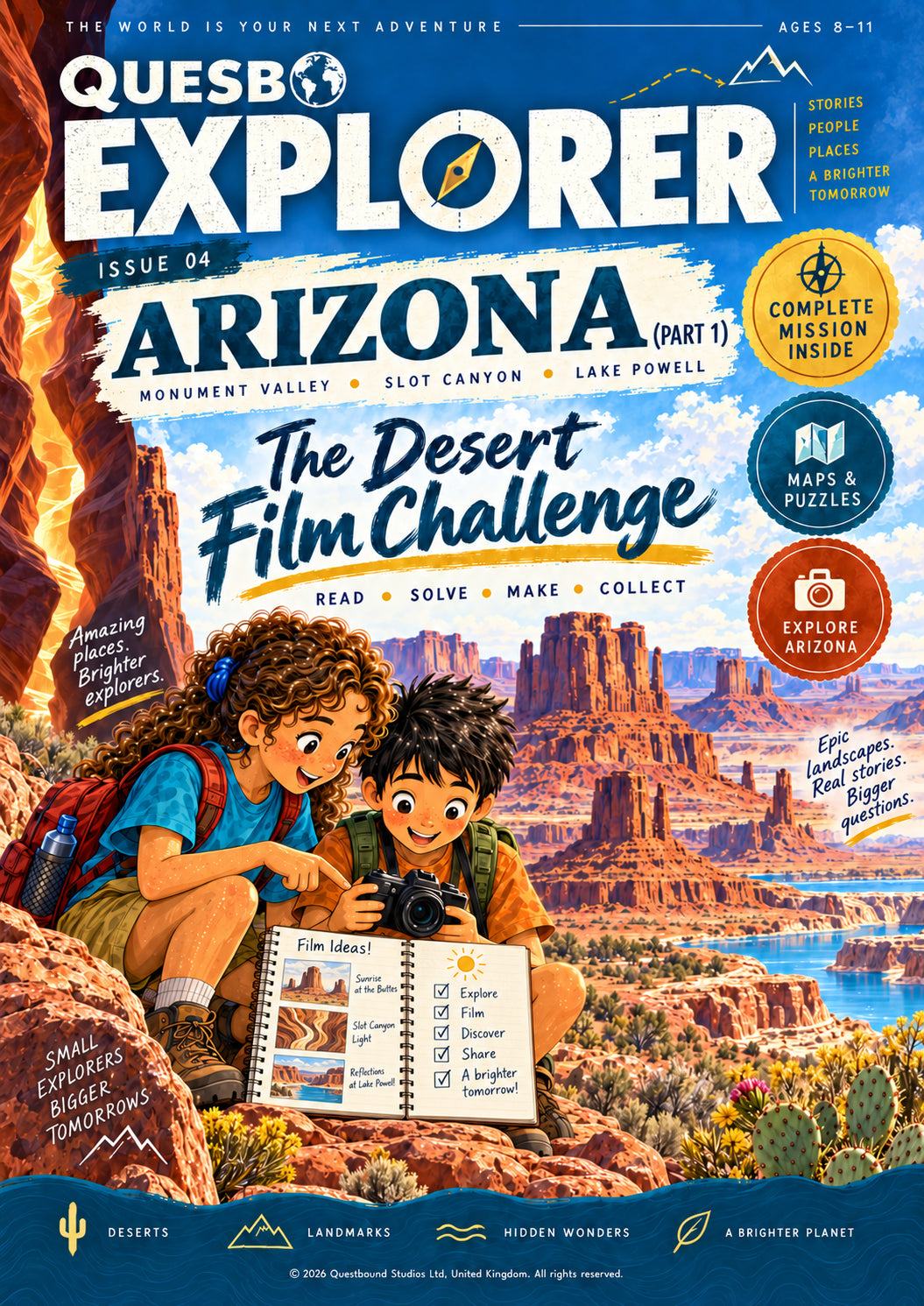
Issue 1 takes young readers to the Atacama Desert, where they follow the characters Maya and Leo past volcanoes, salt flats and high-altitude lagoons. Parents wanting to compare other destinations can browse the Arizona issues. The issue explains how plants and animals survive in one of the driest places on Earth, and it introduces the desert's famous night skies. It is a strong first choice for a child who enjoys geography and nature.
Quesbo Explorer Issue 6: Alaska, The Wild North Challenge
Issue 6 covers Alaska's mountains, glaciers and coastlines, along with bears, whales and eagles. It runs to 65 pages, so it gives a child a longer read than some other issues. The puzzles and explorer activities help build observation and problem-solving skills.
Science Magazines With Experiments for Kids
If your child wants to do as well as read, look for issues that include hands-on activities. Quesbo Explorer issues include puzzles, observation tasks and creative missions.

Hands-on experiments reinforce what a child reads, so a magazine with a few activities per issue can offer more value than one that is only text. To extend the learning beyond the magazine, try the printable activity pack.
Science Magazines for 10 Year Olds and Reading Level
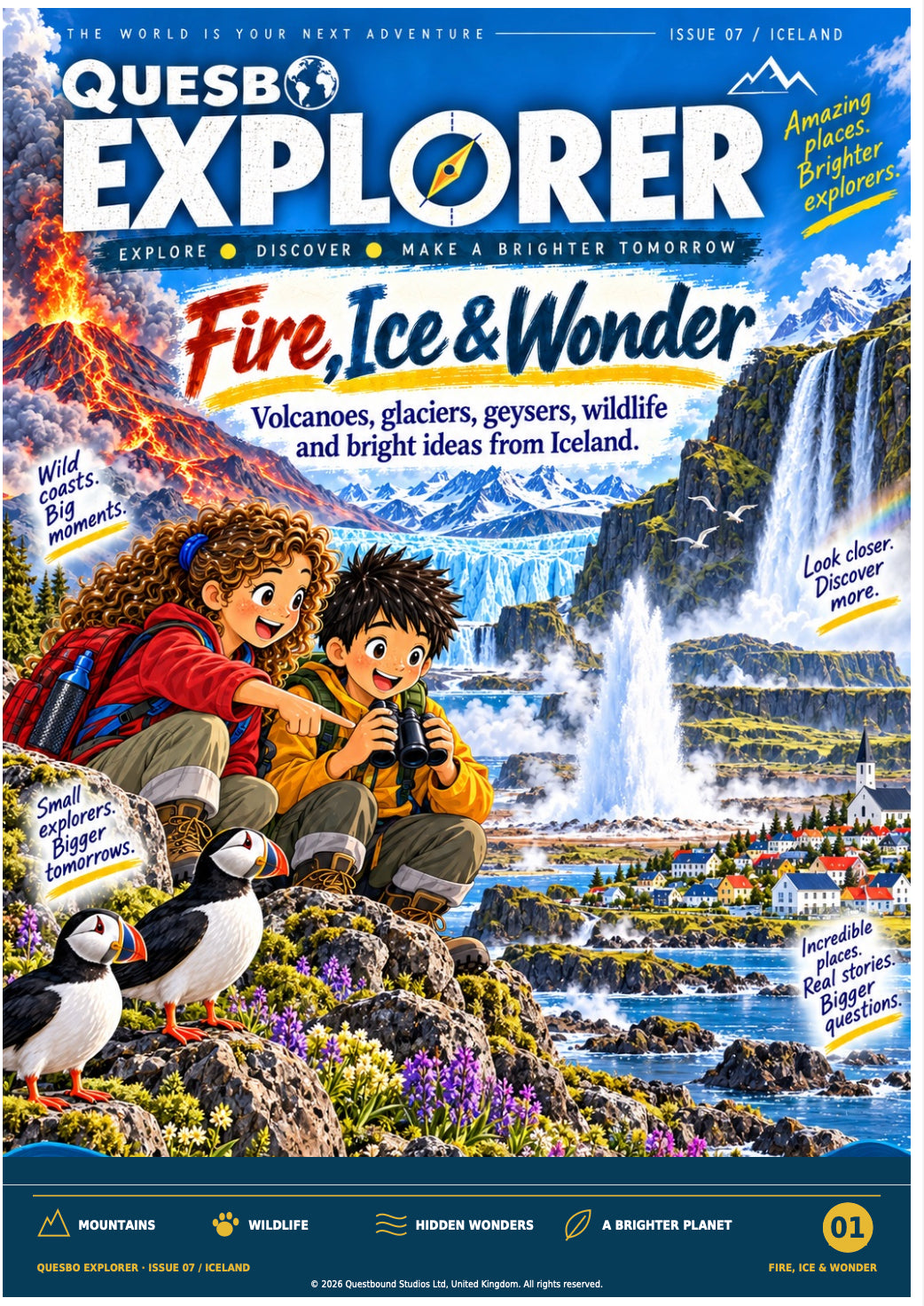
Reading level is the single biggest reason a magazine gets abandoned between ages 8 and 11. A title that suits a confident nine-year-old can frustrate a child who is still building stamina, and one written for age seven will bore a ten-year-old within a page. Parents of older readers can look at the more advanced Iceland volume to judge the level. Because most magazines state a broad age band rather than a reading level, it helps to judge each title yourself against four practical measures: sentence length, vocabulary, article length and how much prior knowledge a page assumes.
A useful rule of thumb is that a child reading independently at age 8 to 9 typically manages sentences of around 10 to 15 words with familiar vocabulary and short paragraphs of two to four sentences. By age 10 to 11, many children cope with longer sentences, subordinate clauses and subject-specific words such as 'geothermal', 'altitude' or 'glacier', provided the surrounding text explains them. When you look at sample pages, count the words in a typical paragraph and check whether technical terms are defined in the sentence or in a glossary. A magazine that introduces a term and then uses it again two pages later is helping the child build vocabulary; one that leaves it unexplained assumes knowledge the reader may not have.
Article length matters as much as sentence length. A single spread of around 300 to 500 words is comfortable for most eight- to nine-year-olds in one sitting, while a feature of 800 words or more suits a ten- to eleven-year-old who has built reading stamina. Page count is a rough proxy: a 40-page issue with short, heavily illustrated spreads reads very differently from a 58- or 65-page issue with longer features, even when both are aimed at the same age band.
Independence is not all-or-nothing. Many families find a mixed approach works best: the child reads the comic panels, captions and puzzles alone, and an adult reads the longer factual feature aloud or shares it. That pattern lets a younger or less confident reader enjoy a more demanding title without giving up. If your child is reading below the expected level for their age, choose a shorter issue and read the first page together to check comprehension before buying more.
Watch out: a magazine that looks age-appropriate from its cover can still assume background knowledge your child does not have, so always read a sample spread rather than judging by the cover or the stated age range alone.
For a ten-year-old who reads confidently and wants a longer, more detailed read, a 58-page A4 issue covering landscapes, wildlife and energy sources such as hydropower and geothermal power offers more challenge than a shorter title. For a child still building confidence, a shorter issue read partly together is the safer starting point. The aim is to match the text to the child in front of you, not to the number on the cover.
The table below summarises the reading-level guidance given in this section, so you can check a title against your child's stage.
| Age stage | Typical sentence length | Article length |
|---|---|---|
| 8 to 9 | 10 to 15 words | 300 to 500 words |
| 10 to 11 | Longer sentences with clauses | 800 words or more |
| Confident reader, 58-page issue | Longer features | 58 pages |
| Less confident reader | Shorter issue, read together | Short spreads |
Children's Science Magazine Subscriptions and Costs
Cost is where magazine guides most often stay vague, so this section sets out what to check before you commit. Prices vary widely by title, format and term, and the headline price is rarely the whole story. The practical approach is to compare cost per issue alongside page count, whether activities are included, and what happens at renewal.
Start with the format. Print subscriptions usually cost more than digital because of printing and postage, but they arrive ready to read and need no screen. Digital subscriptions are often cheaper and arrive immediately, which suits families who travel or want to try a title before committing to print. Some publishers offer a combined print-and-digital option.
Next, look at the term. Many subscriptions run for 6 or 12 issues, and some auto-renew unless you cancel. Before buying, find the renewal price, the renewal date and the cancellation window in the publisher's terms.
Delivery details matter too. Check the expected dispatch time for the first issue, whether delivery is included in the price or charged separately, and what happens if an issue is lost or damaged. For print titles, confirm the delivery area and any surcharges. For digital titles, confirm which devices and apps are supported and whether back issues remain available.
Trial options are worth asking about. When comparing costs across publishers, work out the price per issue, the page count and whether puzzles and experiments are included; a longer issue with activities can offer better value than a cheaper, shorter read.
Watch out: auto-renewal terms are easy to miss, so diarise the renewal date and check the cancellation window as soon as you subscribe rather than waiting for the reminder email.
Finally, keep a simple record of what you paid, the term length and the renewal date for each title. That makes it straightforward to compare value at the end of the term and to decide whether to continue, switch format or move to single issues.
Choose Your Child's First Issue This Week
Pick the issue that matches your child's strongest interest, whether that is deserts, wildlife, geography or energy. If your child also enjoys interactive learning, you can compare language learning apps and browser games as a complementary option. Read the first few pages together to see whether the tone and challenge suit them. If your child also enjoys interactive learning, the Quesbo language learning apps and browser games are a useful complementary option to explore.
Start with one issue at £4.99 and see how your child responds. A magazine that sparks questions and gets them doing the activities is the right choice, and you can add more issues once you know what they enjoy.
Frequently Asked Questions
What are the best science magazines for children aged 8 to 11?
The strongest options for this age group combine clear explanations with hands-on tasks. Quesbo Explorer is one example: each issue, priced at £4.99, pairs geography and nature content with puzzles and creative activities. Compare the reading level, the balance of text and illustration, and whether the magazine suggests activities a child can do alone. Choosing by your child's interests, such as animals, space or the natural world, usually gives the best result.
Are science magazines suitable for reluctant readers?
They often are, because a magazine breaks reading into short sections with pictures, puzzles and challenges rather than long chapters. Reluctant readers tend to respond better to a mission or question at the start of each feature. Look for issues with plenty of illustration and interactive pages, and read a few pages together first to check the tone suits your child before committing to a subscription.
Are there science magazines with experiments children can try at home?
Some Quesbo Explorer issues include puzzles and creative activities. Check the product description before buying to see which activities each issue includes.
What should I look for in a science magazine for my child?
Check the recommended age, the reading level, how much of the content is hands-on, and whether the magazine is digital or printed. Look at the price per issue. A magazine that links science to geography, wildlife and real places often holds an 8 to 11 year old's interest longer than one that covers only theory.

